
Everyone in SEO is talking about LLMs.txt right now.
Plugins are pushing it. Creators are recommending it. And suddenly, it feels as if you don’t have it, you’re missing out on AI visibility.
But here’s the problem:
No one is showing real proof. No traffic impact. No ranking impact. No AI visibility data.
Just assumptions. That’s where it gets interesting.
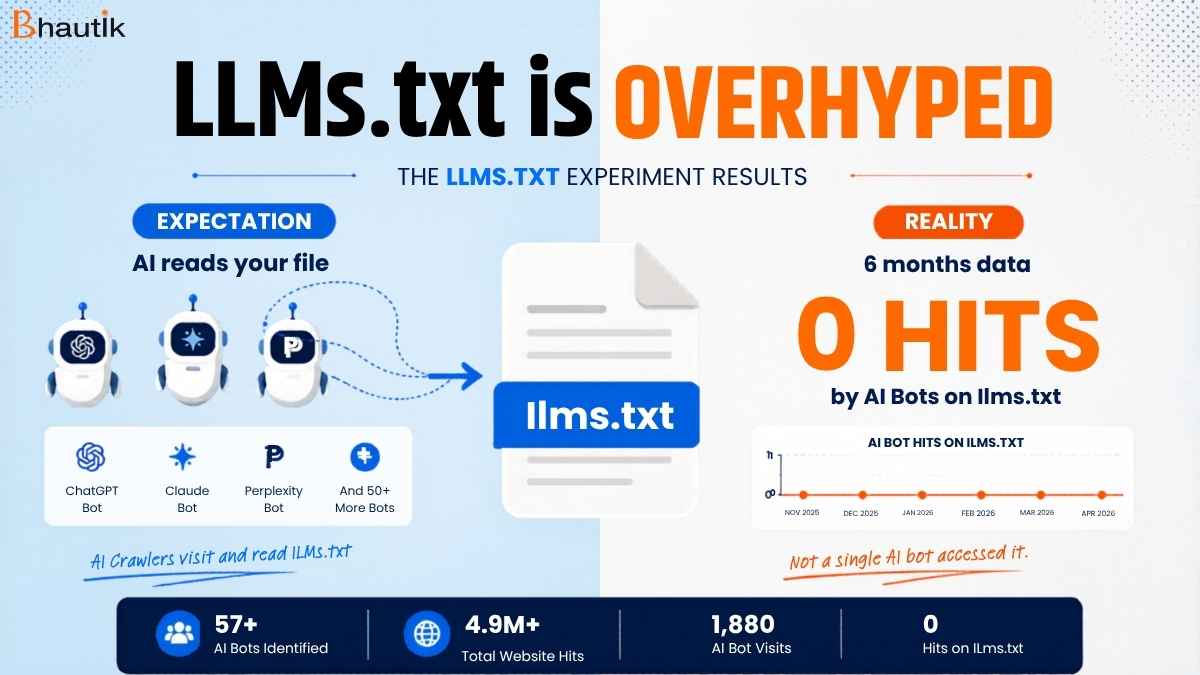
A 6-month real-world experiment was conducted to test whether LLMs.txt actually matters.
The result? Zero impact.
In this blog post, I’ll explain the data, what’s really going on behind the scenes, and whether or not you should care about LLMs.txt.
What Is LLMs.txt And Why Everyone Started Talking About It?
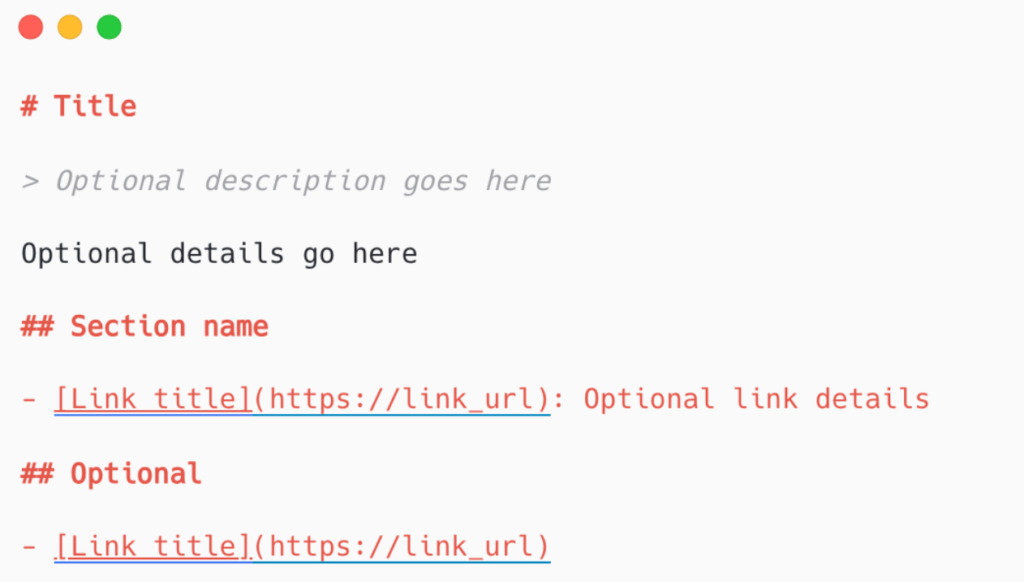
LLMs.txt is a plain text file you place in the root of your website (like robots.txt or sitemap.xml). The idea is simple: you write a structured summary of your website so that AI crawlers and LLMs can better understand your content.
If Google has robots.txt, why shouldn’t ChatGPT have LLMs.txt?
That logic made it go viral in the SEO and GEO (Generative Engine Optimisation) space. Plugins started shipping it as a feature. Twitter threads started calling it “the future of AI SEO.”
Here’s the problem: nobody tested whether AI bots actually read the thing.
Until now.
The Big Claim Around LLMs.txt
The idea behind LLMs.txt sounds great on paper:
- Help AI bots understand your content
- Improve visibility in ChatGPT, Perplexity, and AI Overviews
- Structure your website for LLM access
Sounds familiar, right?
It’s basically being positioned as: “robots.txt for AI”
And that’s exactly why it’s spreading so fast.
But here’s the catch:
Just because something sounds logical doesn’t mean it’s being used.
The 6-Month Experiment (Real Data, Not Opinions)
Amit Tiwari covered a real-world scientific experiment conducted by the founder of The SEO Framework, a WordPress SEO plugin.
Here’s what they did:
- Hosted a dummy website with an LLMs.txt file
- Ran the experiment from October 31, 2025, to April 10, 2026, six full months
- Tracked server logs to measure every single hit by every user agent (bots + humans)
- Specifically watched whether any AI or LLM-related bots accessed the LLMs.txt file
The setup was clean. The methodology was solid. And the results?
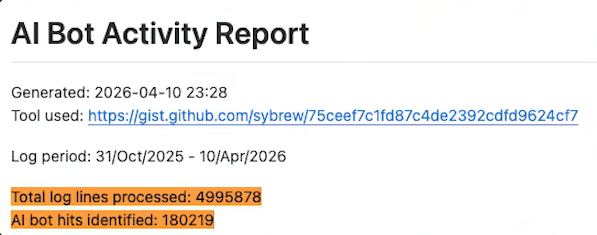
Metric Result
| Total website hits | 4,900,000+ |
| AI bot hits (all bots combined) | 180,219 |
| AI bot hits on LLMs.txt | 0 |
| Unique AI/LLM bots identified | 57 |
| Bots impersonating a Google crawler | 23 |
Nearly 5 million total hits. Over 180,000 hits from AI bots. And not a single one of those AI bots touched the LLMs.txt file.
Not ChatGPT. Not Claude. Not Perplexity. Not Meta. Not Apple. None.
AI Bot Activity Report
(Insert your screenshot here)
Caption: AI bot activity across 6 months, thousands of visits, but zero interaction with LLMs.txt
AI Bots Are Crawling… Just Not LLMs.txt
This is where most people get confused.
They assume: AI bots exist → So they must be using LLMs.txt.
That’s not what the data shows.
Here are some of the bots actively crawling websites:
- ChatGPT (OpenAI)
- GPTBot
- ClaudeBot (Anthropic)
- PerplexityBot
- Amazonbot
- Applebot
- Meta bots
- TikTok (ByteDance)
- DuckDuckGo bots
Total identified AI bots: 57
And yes – they regularly crawl websites.
📊 AI Bot List & Activity
(Insert your screenshot here)
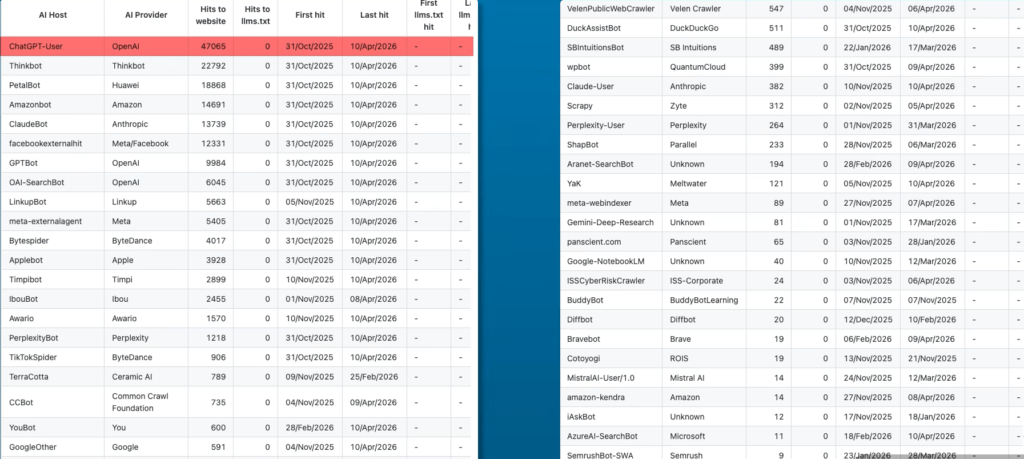
Caption: 57+ AI bots actively crawling websites, none requesting LLMs.txt
Then, Who Is Accessing LLMs.txt?
This is the most interesting part. Because LLMs.txt was accessed. But not by the bots you think.
Unknown Visitors Requesting LLMs.txt
(Insert your screenshot here)
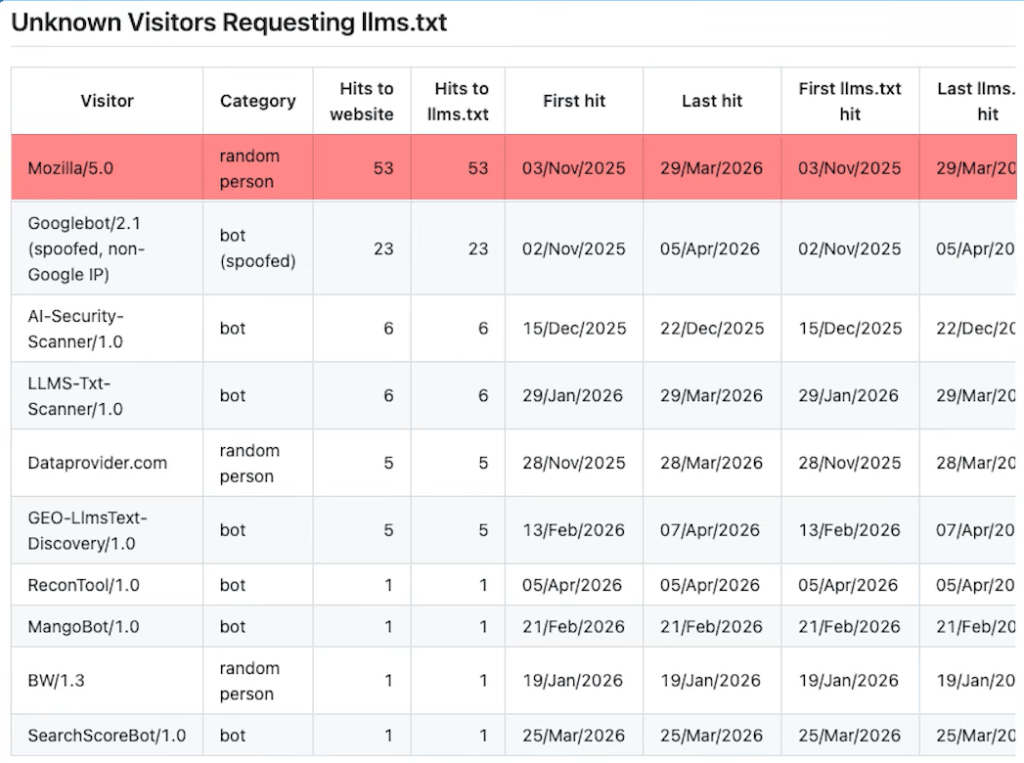
Caption: Most LLMs.txt requests come from random users, scanners, and spoofed bots
Breakdown of Visitors:
- Curious Humans
- People manually checking /llms.txt
- Mostly SEO folks testing trends
- Fake Google Bots
- 23 instances detected
- User-agent = Googlebot
- IP ≠ Google IP
- Scanner Bots
- AI-Security-Scanner
- LLMs.txt Scanner
- GEO discovery bots
- Random Crawlers
- Unknown tools
- No real AI usage
The only ones reading LLMs.txt are people curious about LLMs.txt.
Not actual AI systems.
Why Plugins Are Still Promoting It?
If LLMs.txt has zero usage, why are tools like RankMath and others pushing it?
Simple: They’re betting on the future.
Not the present.
This is a classic pattern behaviour in SEO:
- A new trend appears
- Tools add support quickly
- Everyone starts using it
- Real impact? Unknown
This Isn’t the First Time
If you’ve been in SEO long enough, you’ve seen this before.
Take IndexNow by Microsoft.
- Introduced as a faster indexing protocol
- Supported by Bing
- Not supported by Google
Result?
👉 Minimal adoption
👉 Limited real-world impact
Same situation here.
The Real Problem: Confusing Possibility with Reality
LLMs.txt might be useful in the future.
But right now? There’s no evidence.
And that’s where most people go wrong.
They optimise for: What might happen, instead of what’s actually working
What Actually Works for AI Visibility (Right Now)
If your goal is to show up in:
- ChatGPT
- Perplexity
- AI Overviews
Then LLMs.txt is not your lever.
Here’s what actually matters:
This is where I want to be direct. I’ve seen businesses generate real organic results 1.5M+ clicks, 7,800+ leads, page-one rankings in 20 days, not by chasing unproven tactics, but by building solid systems.
Here’s what actually influences your visibility in AI-generated answers right now:
1. Your content needs to be genuinely crawlable.
AI bots are hitting your site thousands of times. The question is whether your content is structured clearly enough for them to extract value. Technical SEO fundamentals, clean site architecture, fast load times, and proper schema markup still matter more than any LLMs.txt file.
2. Topical authority wins.
ChatGPT, Perplexity, and Gemini draw on sources they consider authoritative on a given topic. If you have 3 blog posts and a home page, you’re not authoritative. If you have a deep content cluster around your core topic, you are. This is GEO and SEO working together.
3. Brand mentions and citations.
AI models are trained on the web. If people mention your brand, quote your content, and link to your pages, that signal gets baked in over time. Your off-page presence matters as much as your on-page setup.
4. Structured data (schema) is the closest thing to LLMs.txt that actually works.
Schema tells search engines and increasingly, AI systems what your content is about in a structured, parseable format. This has real adoption. This has real data behind it.
5. Conversion-focused content, not just traffic-focused content. Traffic is useless if it doesn’t convert. Build content that answers questions your customers are actually asking, and structure it to move them toward a decision.
The Bigger Lesson for Business Owners
If you’re a business owner or founder reading this, please don’t let your SEO agency upsell you on LLMs.txt setup as a service.
Right now, it doesn’t do anything. You could spend that time and budget on content that ranks, pages that convert, or automation systems that actually generate leads.
Chasing unproven trends is how businesses waste their SEO budget. Building systems is how they grow.
The data from this 6-month experiment is clear. 57 AI bots. 180,000+ AI hits. Zero LLMs.txt reads.
That’s not a maybe. That’s a result.
My Take: This Is Not About LLMs.txt Specifically
Here’s what I think this experiment really reveals.
The SEO industry has a habit of adopting new “signals” before anyone verifies whether they work. We saw it with AMP. We saw it with IndexNow. And now we’re seeing it with LLMs.txt.
Rank Math added LLMs.txt support. Yoast added it. Every AI SEO plugin is shipping it. But they’re not doing it because AI bots actually use it, they’re doing it because the conversation around it is loud. They’re riding the wave. Covering their bases in case something changes.
That’s not a growth strategy. That’s fear-driven feature shipping.
And as Amit Tiwari pointed out in his analysis, this mirrors exactly what happened with Microsoft’s IndexNow infrastructure. Great concept. Real adoption by Bing and other engines. But Google never supported it, so its real-world impact stayed minimal.
Until a major player like Google actively reads and uses LLMs.txt, its value is effectively zero.
Final Thoughts
LLMs.txt is a good idea, but it’s stuck waiting for adoption. The concept isn’t wrong. Standardising how AI bots understand your website makes sense in theory. But theory and reality are two different things.
Right now, in the real world, no major AI crawler reads it. No chatbot uses it. And no business has seen measurable results from it.
The SEO space moves fast, and it’s easy to get caught up in what’s trending. But trending doesn’t mean working. If you want AI visibility, focus on clean technical foundations, deep topical content, and brand authority, not a text file that nobody reads.
Huge credit to Amit Tiwari (AmitTiwari.net) for covering this experiment and making the data publicly available. This is exactly the kind of evidence-based analysis the SEO/GEO space needs more of.
Want to Build AI + SEO Systems That Actually Convert?
Most businesses are still stuck chasing tactics. But growth doesn’t come from tactics.
It comes from systems.
If you want to:
- Rank on Google
- Appear in AI tools
- Generate real leads
👉 Book a consultation and let’s build a system that works.
FAQs
Does LLMs.txt help in AI SEO?
No proven data supports this. Current experiments show zero interaction from AI bots.
Will LLMs.txt be useful in the future?
Possibly. But until major players like Google adopt it, its impact will remain minimal.
Should I add LLMs.txt to my website?
You can, but don’t expect any measurable results.
What should I focus on instead of LLMs.txt?
Focus on content quality, topical authority, and structured SEO systems.