
WordPress plugin SEO case study: page 3–5 to page 1 in 24 months.
A useful plugin, invisible in a category run by big brands. I built the pages buyers read right before they choose, and kept tuning them until the core terms reached page 1.
- Core terms
- p3–5 → p1
- Ranking keywords
- 13,000+
- Monthly organic visits
- 7,900+
The short version
Win the comparison,
win the install.
This WordPress plugin SEO case study follows a SaaS plugin for the US market over 24 months. Its core commercial keywords sat on Google page 3 to 5. I built best-of, comparison, alternative-to and feature pages around how plugin buyers decide, then kept re-optimising them. The core terms reached page 1, the site now ranks for 13,000+ keywords and it gets 7,900+ organic visitors a month.
It is the approach I use as a SaaS SEO consultant. For a B2B SaaS example, read the server management SaaS case study.
- Client
- WordPress SaaS plugin
- Market
- USA
- Timeline
- 24 months
- Main lever
- Comparison, alternative and feature pages
- Measured in
- Google Search Console, GA4, Semrush
Where it started
A good plugin
nobody could find.
In SaaS, anything below page 1 sends close to no clicks. This plugin was two to four pages further down.
Buried on page 3 to 5
The core commercial terms ranked where almost nobody clicks. To a buyer, the plugin didn't exist.
Big names own the SERP
Established plugins held page 1 with years of content and strong domains behind them.
No pages for the decision
Feature pages existed, but nothing answered "best X plugin", "X vs Y" or "alternative to X".
Readers, not users
The little organic traffic it had landed on tutorials. People read, then left without installing.
The climb
Three to four pages up.
Where buyers actually look.
No shortcuts. Three moves, repeated for every page that mattered.
- 01
Build the pages buyers compare on
Best-of lists, head-to-head comparisons, alternative-to and feature pages.
- 02
Make each one convert
A clear verdict, honest trade-offs and a next step to install or try.
- 03
Re-optimise as rankings move
Title tests, content expansion and internal links, page by page.
- Page 1Month 24
- Page 2
- Page 3Start · p3–5
- Page 4
- Page 5
The buyer decision map
Four searches before an install.
A page built for each one.
Plugin buyers rarely install the first thing they see. They shortlist, compare, look for alternatives and check one key feature. The content followed the same path.
- 01Shortlist
Example search: best [category] plugin for wordpress
Best-of list
An honest round-up with real feature breakdowns, so the plugin earns its place on the shortlist.
- 02Compare
Example search: [plugin a] vs [plugin b]
Head-to-head comparison
Side-by-side features, pricing model and fit. The page a buyer opens right before deciding.
- 03Switch
Example search: [competitor] alternative
Alternative-to page
For people unhappy with a tool they already use. High intent and usually ignored by big brands.
- 04Confirm
Example search: [plugin] [feature]
Feature deep dive
Answers the last question before install: does it do the one thing I need, and how?
What a converting “vs” page looks like
A verdict at the top, a feature table a buyer can scan in ten seconds, honest trade-offs, then one clear next step. Pages built this way can rank on Google and get quoted when someone asks an AI tool which plugin to pick.
How AI answer optimization worksThe 24 months
Slow for a year.
Then it compounded.
Each square is one month. The deeper the orange, the more the earlier work was paying back.
- Months 1–3
Build the decision pages
Comparison, alternative and feature pages planned around buyer intent and published.
- Months 3–6
First ranking gains
The new pages index and core terms start climbing out of pages 3 to 5.
- Months 6–12
Refine what's moving
Titles tested, content expanded and internal links adjusted on the pages gaining ground.
- Months 12–24
Compounding
Traffic accelerates after month 12. By month 24: 7,900+ monthly visitors and 13,000+ keywords.
The proof
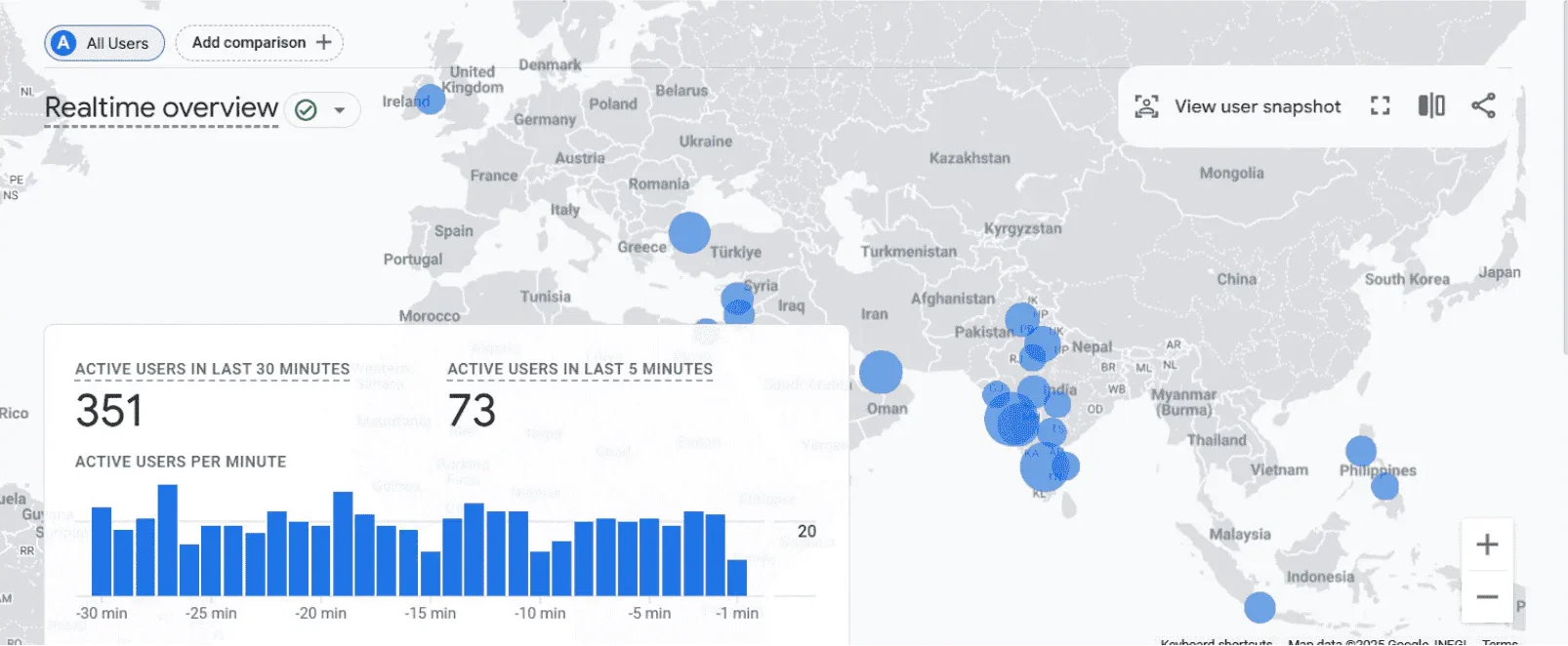
A live snapshot
from the client's GA4.
What you can copy
Three lessons
for any SaaS in a crowded category.
- 01
Comparison pages do the selling.
SaaS buyers compare before they install. Owning the "vs" and "alternative" searches put the plugin in the room when the decision was made.
- 02
Give it 12 months.
The first gains showed in months 3 to 6. The real growth came after month 12. Most teams quit before the curve bends.
- 03
Ranking pages need maintenance.
SaaS results shift fast. Regular title tests and content refreshes kept pages on page 1 once they got there.
“Your buyers are already comparing you with someone. The only question is whose page they read while they do it.”
Is this you?
When this playbook fits,
and when it doesn't.
A good fit if
- You sell a SaaS product or WordPress plugin in a crowded category
- Competitors show up for "best" and "vs" searches and you don't
- Your organic traffic reads tutorials but rarely signs up
- You can commit to SEO for 12 months or more
Probably not a fit if
- You need sign-ups this month (paid search is faster)
- You won't publish honest comparisons that name competitors
- You want guaranteed rankings by a fixed date
FAQ
Questions about
plugin and SaaS SEO.
Something else on your mind? Email me at hello@bhautikkapadiya.com.
More results
Other industries,
same measured approach.
Your turn
Buyers are comparing tools.
Is yours on the list?
Book a free 15-minute call. We'll check where your product ranks for its best, vs and alternative searches, and which pages to build first.
I take on a limited number of retainer clients at a time.