
A cross-platform server management SaaS went from zero organic presence to 10,900+ clicks, 351K impressions, and multiple paid conversions all within four months. No paid ads. No backlink campaigns. Just a proper SEO foundation executed consistently from day one.
Here is exactly how I did it.
TL;DR:
I took a SaaS product with zero organic traffic and built it to 10.9K clicks and 351K impressions in four months. The strategy was simple: deep product understanding, real competitor research, intent-matched content, and technical SEO done right. The product now ranks in Google, appears in AI Overviews, and gets cited in Perplexity and Claude. Five lifetime plans and multiple monthly subscriptions sold through organic search alone.
What Was the Starting Point?
The product is a server management tool built for developers, freelancers, and small teams managing VPS fleets across macOS and Linux. Think SSH client meets deployment dashboard.
When I started in June 2026, the situation was straightforward: zero organic traffic, zero indexed content targeting buyer keywords, and zero AI search visibility. The product was solid. The SEO foundation was missing.
What Did the SEO Strategy Actually Look Like?
I did not run some complex, agency-style playbook. The approach was fundamentally simple.
Step 1: Product and market understanding
Before writing a single word, I spent time using the product, understanding every feature, and mapping how real users think about tools in this space. This is where most SaaS SEO efforts fail. They skip this and jump straight to keyword tools.
Step 2: Real competitor research
I analysed what MobaXterm, Termius, Warp, and other SSH clients were ranking for. I looked at what SERP formats Google was favouring: listicles, comparison pages, feature breakdowns. This shaped the entire content architecture.
Step 3: Intent-first keyword research
Not chasing volume. I focused on keywords with clear buyer or evaluator intent people who are actively looking for a solution, not just information.
Step 4: Content built for humans and AI search
Every page was structured answer-first. Short paragraphs. Direct comparisons. Modular sections that AI systems can extract and cite.
Step 5: Technical SEO from day one
Proper schema markup, clean URL structure, fast load times, correct canonicals. Nothing fancy. Just the fundamentals executed without shortcuts.
Building an SEO foundation for a SaaS product is different from content marketing for blogs. The strategy starts with product positioning, not keyword volume. If you are evaluating your own SaaS SEO setup, my SaaS SEO audit guide breaks down the exact checks I run before writing a single page.
What Were the Actual Results After 4 Months?
The numbers speak clearly.
Google Search Console 4-month view:
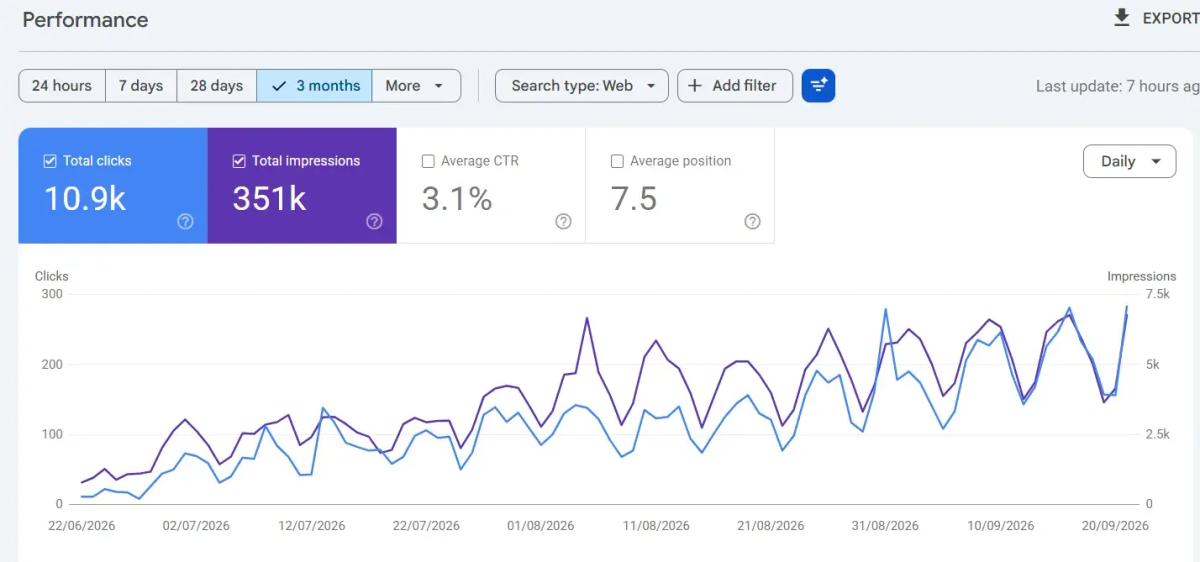
- 10,900+ total clicks
- 351K total impressions
- 3.1% average CTR
- 7.5 average position
Last 28 days alone:
- 5,340+ clicks (up 64% vs. previous period)
- 149K impressions (up 25%)
- 3.6% CTR
- 6.6 average position
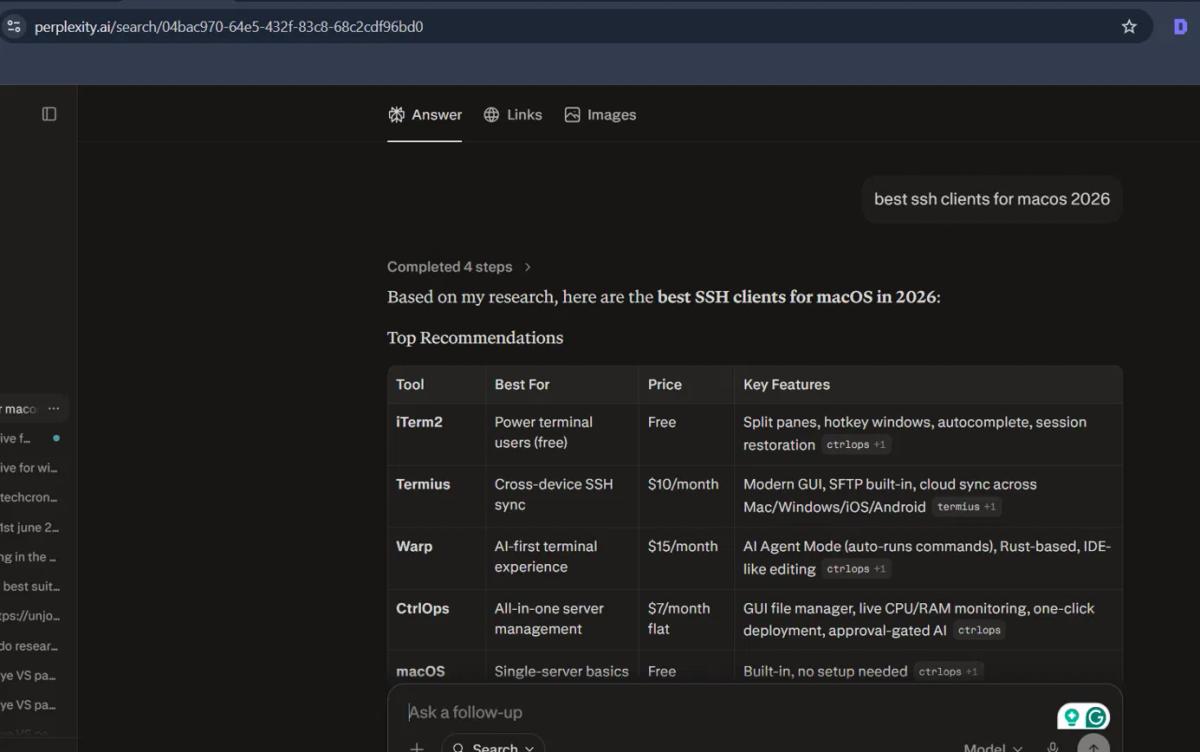
AI search visibility:
- 48,200 impressions in Google's Generative AI features (28 days)
- Product cited in Perplexity AI results for competitive queries
- Brand mentioned and cited in Claude AI responses
- Featured in Google AI Overviews for "MobaXterm alternative" and similar terms
Geographic reach:
- United States: 11% of clicks
- India: 10%
- Germany: 6%
- Indonesia: 4%
- Brazil: 3%
Revenue impact: Five lifetime plans and multiple monthly subscriptions sold entirely through organic search. No paid acquisition involved.
“We assigned SEO one year ago. They have executed the work very efficiently and in a highly professional manner. They follow a proper system and structured approach, and we are gradually seeing consistent growth in our results.”
"We assigned our website SEO work to Bhautik around a year ago. The work has been executed efficiently and professionally. He follows a structured process and systematic approach, and we are gradually seeing consistent growth in our results." James Smith,
Info Box: Most SaaS founders assume SEO takes 12+ months to show results. It does when the foundation is wrong. A proper SEO checklist executed from the start compresses the timeline dramatically.
Why Did This Work When Most SaaS SEO Efforts Stall?
Three reasons.
1. No content bloat
I did not publish 50 blog posts hoping something would stick. Every page had a specific keyword target, a specific search intent, and a specific role in the buyer journey.
2. Dual optimization
We built every page for both Google rankings and AI citations. That meant an answer-first structure, clear entity references, and modular content blocks.
The result? Visibility across Google, Perplexity, and Claude simultaneously.
3. Consistency over tricks
No link-building schemes. No keyword stuffing. No shortcut tactics. Daily execution of fundamentals for four months straight.
Ready to build this kind of organic growth for your SaaS?
I work with SaaS founders who want real search visibility, not vanity traffic. Book a strategy call, and I will audit your current SEO setup for free.